VCT Floor Maintenance: Why Your Tile Needs a Bodyguard (and a Schedule)
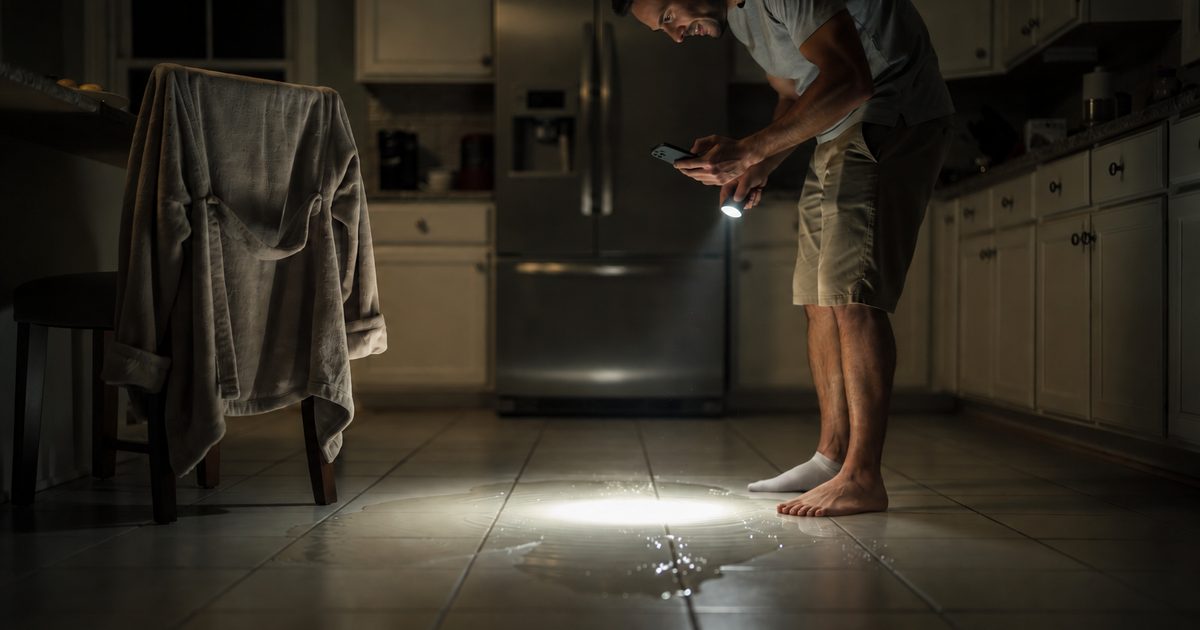
Let me start by admitting I know nothing about floors. My personal floor-care program consists of waiting until something sticks to my sock, then moving to a different room. So take everything I'm about to say with a grain of salt. Then sweep up the salt, because, as we're about to learn, grit is the enemy.
The floor we're talking about is VCT, short for vinyl composition tile. It's the hard-working stuff under your feet in school hallways, grocery aisles, medical offices, church fellowship halls and break rooms all over Athens. It's durable. It's affordable. And it is shockingly needy.
Meet the Bodyguard
Here's the thing nobody tells you about VCT: the tile itself is not supposed to take the beating. That job belongs to the floor finish, the layers of "wax" on top. (Floor professionals will tell you it's technically a polymer finish, not wax, and then they'll look at you the way a sommelier looks at someone who just put ice in the cabernet.)
Industry pros call this finish a "sacrificial" layer, and I am not making that up. Its whole purpose in life is to get scuffed, scratched and ground down so the tile underneath doesn't.
In other words, your floor finish is a Secret Service agent. It throws itself in front of every dropped latte, every rolling office chair and every work boot that just visited a gravel parking lot. And like any bodyguard, it can only take so many hits before it needs backup.
When the finish wears through, the tile is exposed. Dirt grinds straight into it. Stains set in. The surface turns dull and porous, and eventually somebody calls a contractor and says the dreaded words: "How much to replace ALL of it?"
Here's the serious part. Maintaining a VCT floor costs far less than replacing one. Regular VCT floor maintenance is the cheapest insurance policy your floor will ever have.
Why Regular VCT Maintenance Matters
A properly maintained VCT floor does a lot more than look shiny:
- It lasts longer. Protecting the finish protects the tile, which protects your budget.
- It makes a first impression. Customers notice floors. They notice them before they notice your carefully chosen lobby artwork.
- It's easier to clean. A healthy finish keeps dirt sitting on top, where a mop can reach it, instead of letting it move into the tile permanently.
- It's safer. A well-kept floor with the right finish gives better footing than one that's worn, gummy or covered in residue.
A neglected VCT floor, on the other hand, sends a message to every visitor. That message is: "We probably haven't cleaned the coffee maker since the Clinton administration."
The Steps: Your VCT Floor Maintenance Plan
How often you do each step depends on traffic. A school cafeteria lives a very different life than a quiet dentist's back office. But the routine looks like this.
Daily VCT Care
- Dust mop or sweep. Every grain of sand on your floor is a tiny assassin with sandpaper for a personality, and dust mopping is how you escort it off the premises before it reaches the bodyguard.
- Damp mop with a neutral pH cleaner. Not bleach, not ammonia, and not "whatever that blue stuff is under the break room sink." Harsh cleaners eat floor finish, which is basically firing your own bodyguard. Also, damp means damp. Too much water seeps into the seams and loosens the tile adhesive, and your floor is not a Slip 'N Slide.
- Spot-clean spills and scuffs right away. Black heel marks often come right off with a tennis ball on a stick (really). It's the most effective piece of commercial floor care equipment you can buy at a sporting goods store.
Weekly (or As Traffic Demands)
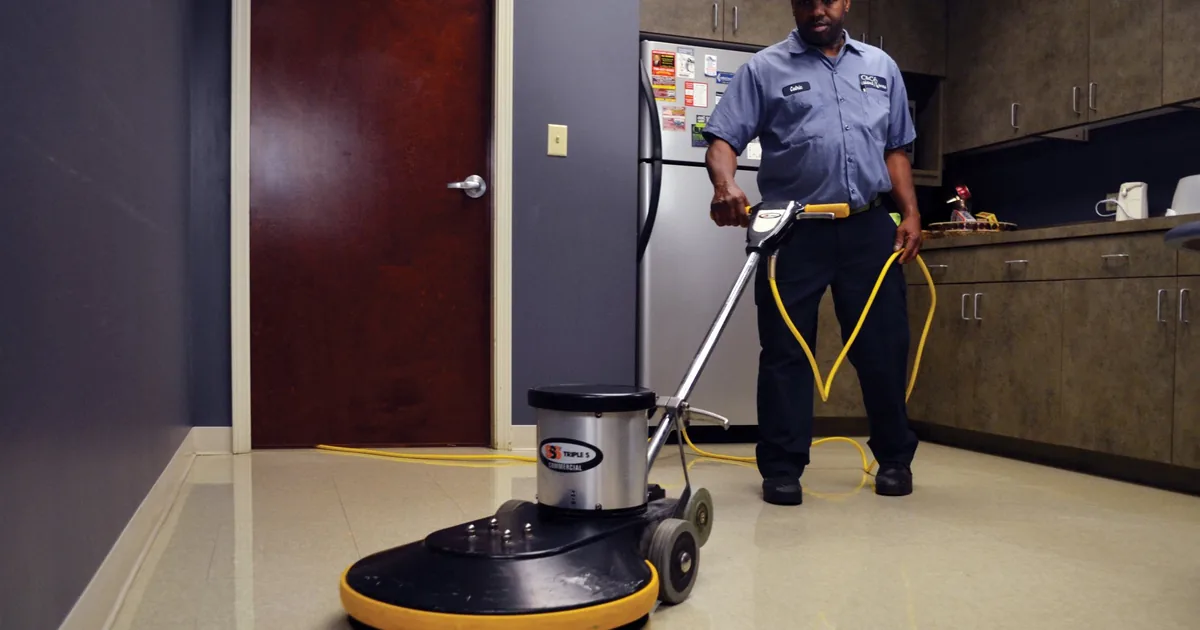
- Machine scrub high-traffic areas. A floor machine or auto-scrubber with the correct pad lifts the dirt that mopping just pushes around politely.
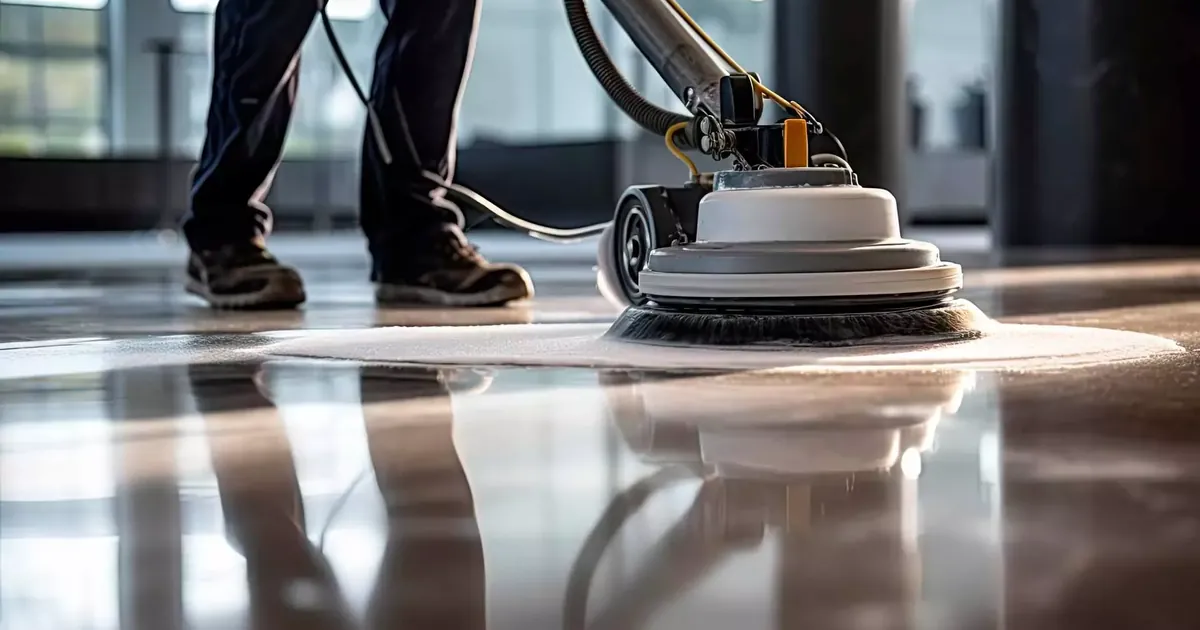
- Spray buff or burnish. Burnishing uses a high-speed machine to heat and polish the finish back to a glossy, hard surface. These machines spin fast enough to qualify as a weather event. They restore shine and toughen the finish so it can keep taking bullets.
Every Few Months: Scrub and Recoat
- Scrub and recoat when the floor looks dull but the finish hasn't worn through. A light scrub removes the top, beat-up layer of finish. Then fresh coats go on top. Think of it as sending your bodyguard to a refresher course, where they learn to dive in front of things with renewed enthusiasm.
When It's Time: Strip and Refinish
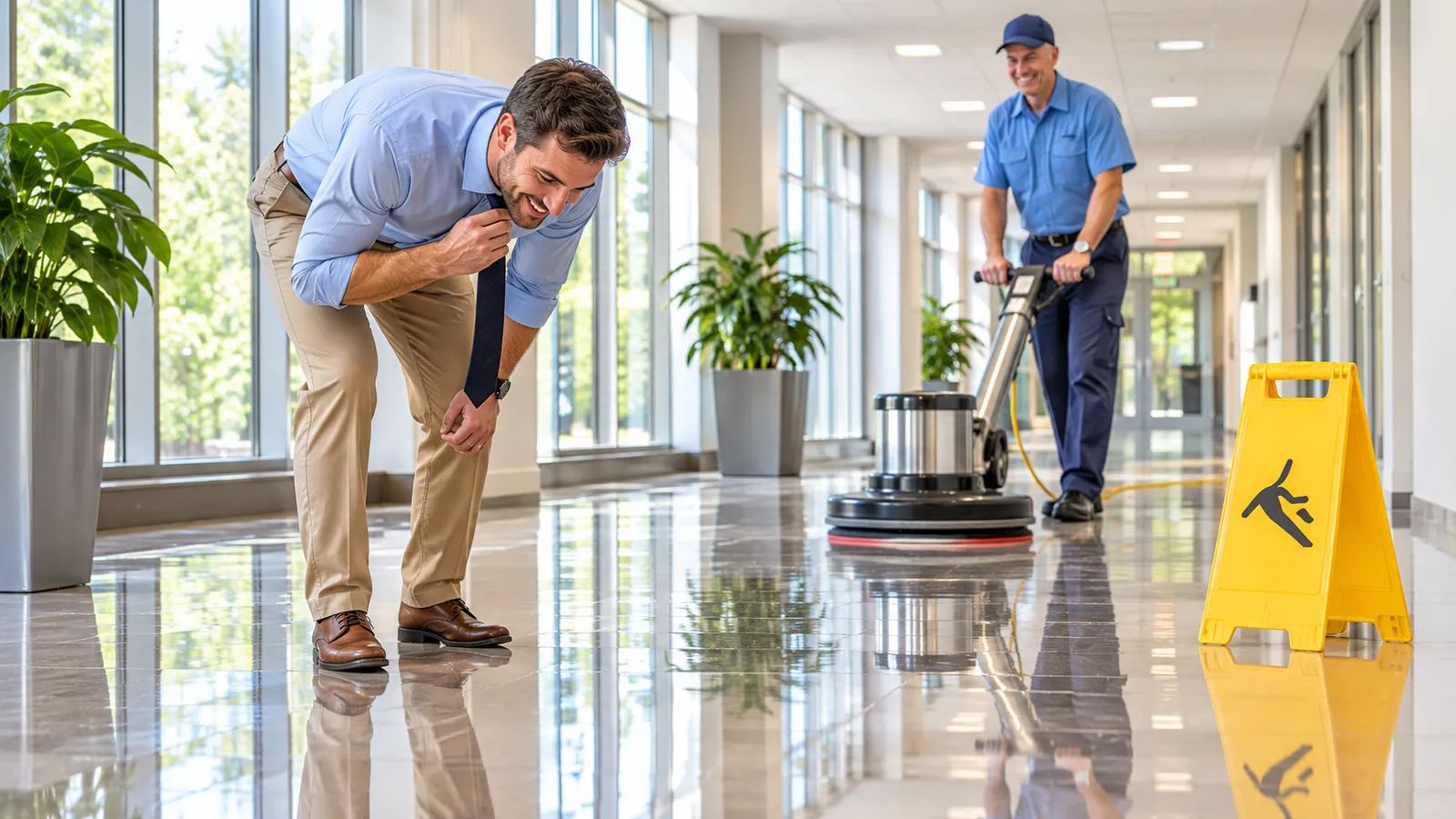
- Strip and wax when the finish is worn through, yellowed, scratched or built up into a cloudy mess. This is the full reset. All the old finish comes off with a stripping solution, and the floor gets rinsed, neutralized and dried completely. Then it gets several thin coats of new finish, each one allowed to dry before the next. The hardest part of the whole process isn't the chemistry. It's keeping people off the wet floor, because humans read the Wet Floor sign (motto: "Please Step Here to See If I'm Serious") as a dare.
Every Day, Forever: Prevention
- Stop the dirt at the door. Put walk-off mats at every entrance, felt pads on furniture legs and chair mats under rolling chairs. Every bit of grit that never makes it onto your floor is a fight your bodyguard never has to have.
For a deeper look at the stripping and waxing process, check out our guide to commercial floor stripping and waxing in Athens, GA and our post on proper VCT floor tile maintenance.
VCT Floor Maintenance FAQs
How often should VCT floors be stripped and waxed?
It depends on foot traffic. Many businesses strip and refinish once or twice a year and use scrub-and-recoat and burnishing in between to stretch the time between full strips. High-traffic areas like entrances, cafeterias and hallways may need more frequent attention.
Can I use regular household cleaner on VCT?
Please don't. Many household cleaners are too harsh and slowly dissolve the floor finish. Stick with a neutral pH floor cleaner made for finished floors.
What's the difference between burnishing and waxing?
Waxing (applying finish) adds new protective layers. Burnishing polishes the finish that's already there to restore shine and hardness. Your floor needs both, on different schedules.
Should I maintain VCT myself or hire a professional?
Daily sweeping and damp mopping are easy to handle in-house. Machine scrubbing, burnishing and stripping take commercial equipment, the right chemicals and experience. That's especially true if you'd like to avoid turning your lobby into an ice rink.
Let Victory RCS Handle the Heavy Lifting
Here at Victory Restoration & Cleaning Service, we take care of VCT floors for businesses, schools, churches and facilities across Athens and Northeast Georgia. That covers routine maintenance plans, burnishing, scrub and recoat, and full stripping and waxing. We also handle tile floors and grout, plus a full lineup of cleaning and restoration services.
Our IICRC-certified technicians have been serving the area since 2016. We'll build a maintenance schedule around your traffic, your hours and your budget, so your floor's bodyguard always has backup.
Call us at 706-410-1241, email [email protected], or request a free quote. You can also stop by 102 S. Main St., Winterville, GA 30683.
And for the love of tile, stop sliding on it in your socks.
Need help with vct floors?
Call Victory RCS at 706-410-1241 or request a free quote.
Learn about our VCT Floors services